


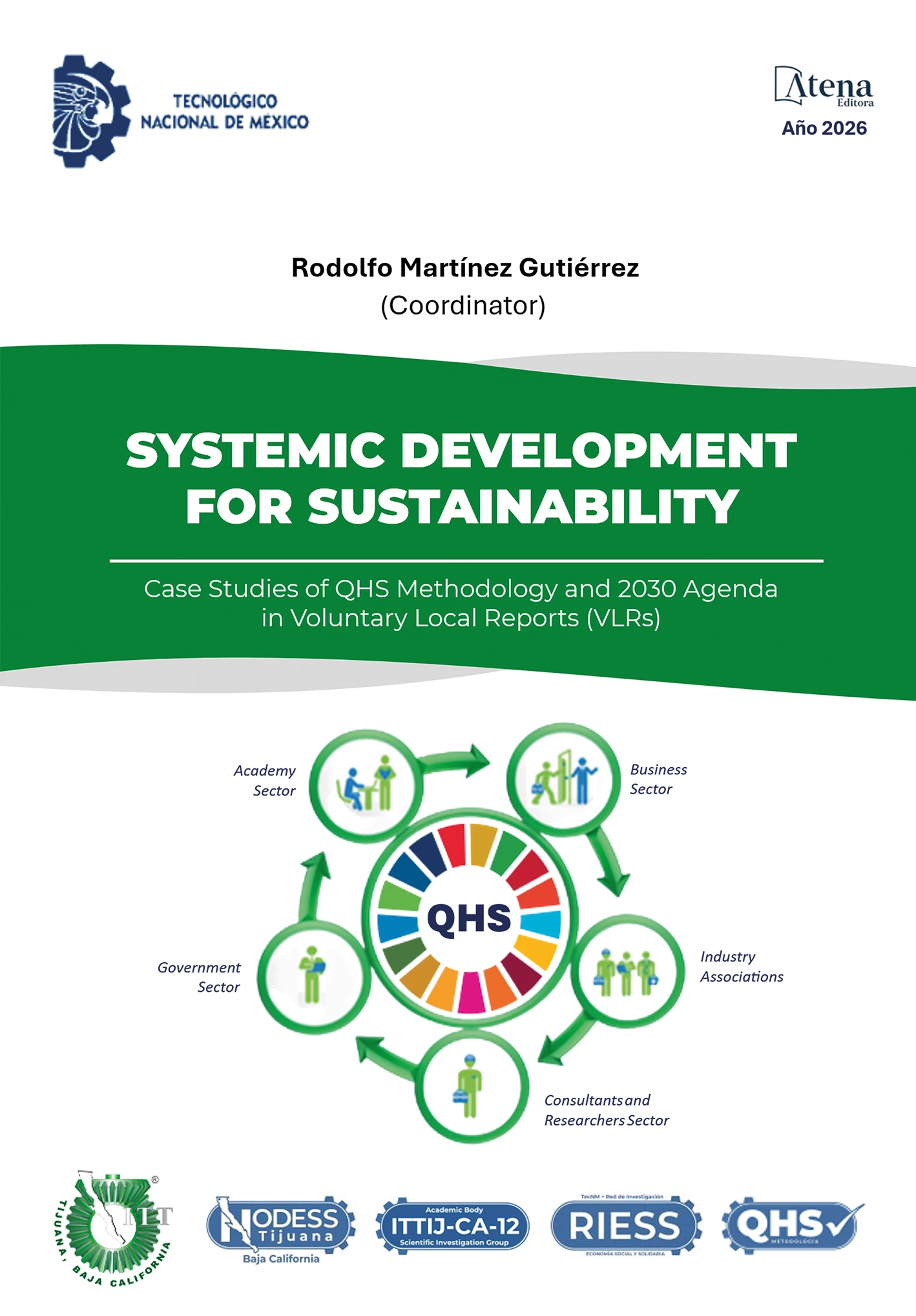
Systemic development for sustainability: case studies of QHS Methodology and 2030 Agenda in Voluntary Local Reports (VLRs)
The National Technological Institute of Mexico in its New Educational Model 2024 integrates four dimensions; philosophical, academic, organizational and linkage. It integrates three principles: the Educational Model “Humanism for Social Justice”; Social relevance, equity and excellence, and continuous improvement. With six transversal axes: Interculturality, Inclusion and Equity, interdisciplinarity, Social Responsibility, Innovation and Vanguard, and Environmental Awareness.
The research project “National Observatory of Social and Solidarity Economy Projects, PRONACES, Research Networks and Agenda 2030” covers several topics of challenges for the integration of the different sectors of society, towards the elaboration of a Voluntary Local Report, which is why the topics and their conceptual description are addressed in the first stage of the introduction.
Through systemic development and policy analysis for sustainable innovation, in turn, the review of administrative and social economy initiatives for technological humanism, which focuses on the integration of ethical and humanistic principles, the social economy seeks to promote social welfare and sustainable development. The conceptual approach aims to describe all the elements that intervened in the experience of the development of the first VLR of the City of Tijuana, theoretical and methodological empowerment.
Voluntary Local Reports (VLRs), according to UNESCO, bring benefits and raise awareness in society. and quality of life to achieve economic growth, social development, and environmental awareness. The 17 Sustainable Development Goals (SDGs) of this agenda aim to alleviate poverty, safeguard the environment, and ensure prosperity for all. A summit on the SDGs was held in 2023 to assess progress and accelerate the actions needed to meet these goals, rights between men and women, good jobs, affordable and clean electricity, clean drinking water and toilets, and economic expansion.
Systemic development for sustainability: case studies of QHS Methodology and 2030 Agenda in Voluntary Local Reports (VLRs)
-
DOI: https://doi.org/10.22533/at.ed.727261102
-
ISBN: 978-65-258-4072-7
-
Palavras-chave: 1. Sustainable development. I. Gutiérrez, Rodolfo Martínez (Organizer). II. Título.
-
Ano: 2026
-
Número de páginas: 228
- Ángel Ernesto Jiménez Bernardino
- Antonio Alfonso Landero Mada
- Artemio Lara Chávez
- Beatriz Chávez Ceja
- Concepción Cruz Ibarra
- Daniel Francisco Nagao Menezes
- Eduardo Ahumada Tello
- Erico Wulf Betancourt
- Gastón Arce Cordero
- Gaudencio Lucas Bravo
- Gladys Yazmín Cuéllar de Reyes
- Guadalupe Acuña Álvarez
- Irais Graciela Barreto Canales
- Juan Fernando Álvarez Rodríguez
- Luis Manuel Cerdá Suarez
- María Jesús Quirós
- Maria Magdalena Serrano Ortega
- Mario Diaz Obrajero
- Miguel Santana Rodriguez
- Qi Boacang
- Ricardo Ernesto Morales Guerrero
- Rodolfo Arce Portugués
- Rodolfo Martinez Gutierrez
- Sonia Mora Carbajal
- Susana Montes Olalde
Artigos
- INTRODUCTION TO SUSTAINABLE DEVELOPMENT AND CONCEPTUAL ASPECTS
- QHS MEQHS METHODOLOGY FOR THE DEVELOPMENT OF SOCIETYTHODOLOGY FOR THE DEVELOPMENT OF SOCIETY
- VOLUNTARY LOCAL REPORT (VLR), ROADMAP CASE TIJUANA CITY, MEXICO 2024
- ENVIRONMENTAL AWARENESS FOR SUSTAINABLE DEVELOPMENT WITH MEANINGFUL LEARNING
- PROFESSIONAL SKILLS AND RESEARCH FOR SECTORAL DEVELOPMENT
- ANALYSIS OF THE INCLUSION OF SUSTAINABLE DEVELOPMENT IN POSTGRADUATE STUDIES IN MEXICO
- SYSTEMIC DEVELOPMENT AND PUBLIC POLICIES FOR SUSTAINABILITY IN A DOCTORAL THESIS IN ADMINISTRATION AT TECNM MEXICO
- SOCIAL POLICIES IN THE IMPLEMENTATION OF SDGS IN THE CITIES OF TIJUANA AND GUADALAJARA, MEXICO
- SDG 17: NATIONAL ALLIANCE OF NODESS TIJUANA IN NORTH, CENTRAL AND SOUTH MEXICO WITH 2030 AGENDA
- SDG 17; RESEARCH AND DEVELOPMENT OF THE UN 2030 AGENDA, CASE: RIESS INTERNATIONAL NETWORK
