


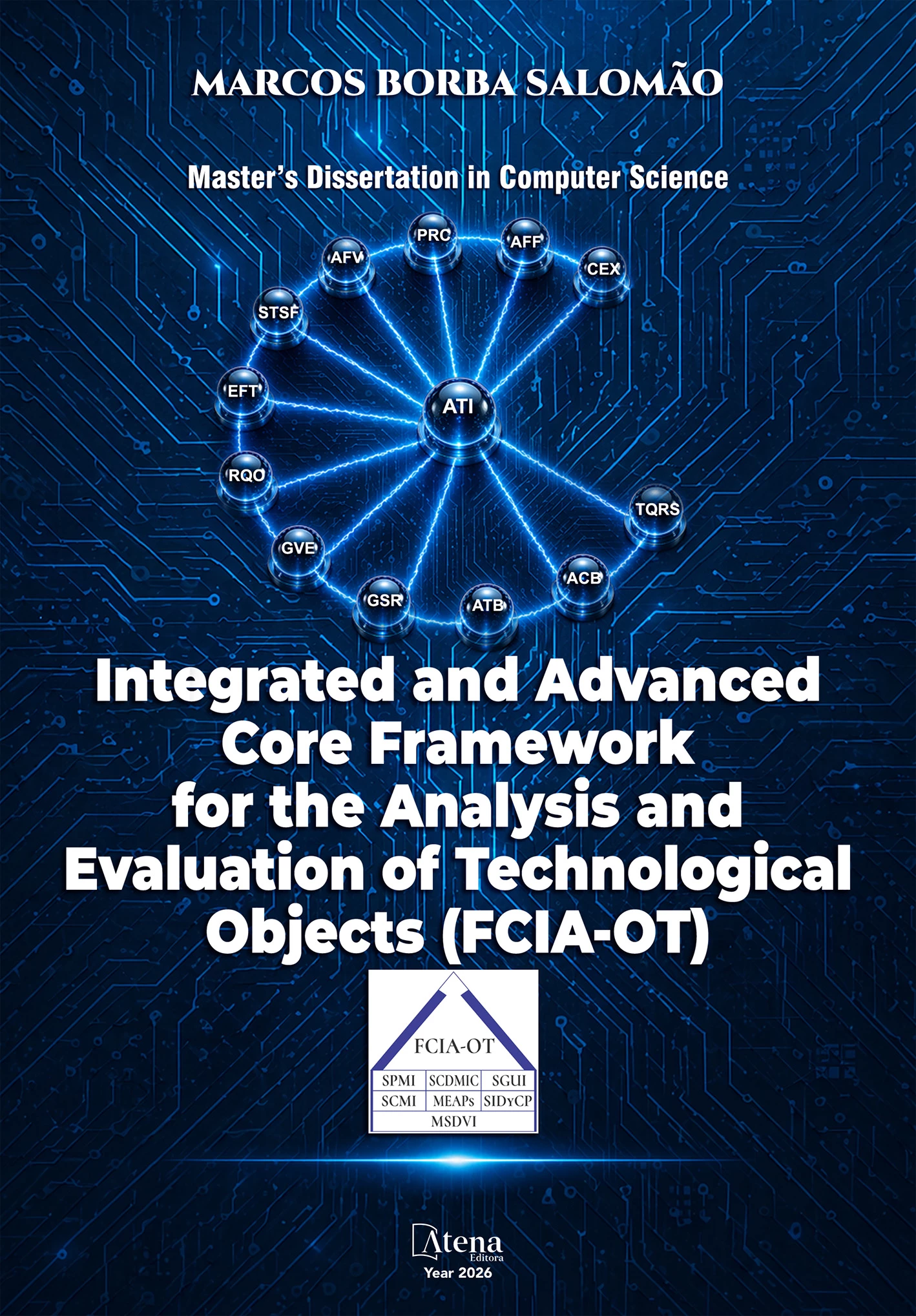
Integrated and Advanced Core Framework for the Analysis and Evaluation of Technological Objects (FCIA-OT)
The present work is situated within a context marked by the progressive intensification of technical, cognitive, and systemic complexity inherent to contemporary technological objects. Such complexity has not only exposed, but structurally evidenced, the limitations of existing analytical and evaluative models, particularly in their inability to coherently integrate multidimensional variables, sustain methodological consistency, and produce results that are simultaneously reliable, reproducible, and normatively grounded.
Throughout the historical evolution of Human–Computer Interaction, Usability Engineering, and related domains, a substantial portion of the proposed methods has remained constrained by fragmented analytical logics, partial dimensional coverage, and insufficient formalization of their underlying structures. These constraints do not merely limit analytical depth; they compromise the epistemic validity of evaluation processes, reduce comparability across contexts, and, in critical scenarios, contribute to the emergence of functional, cognitive, operational, and systemic risks.
In response to these structural inadequacies, this dissertation establishes the Integrated and Advanced Core Framework for the Analysis and Evaluation of Technological Objects (FCIA-OT), conceived as a formally articulated system designed to address the absence of a comprehensive, integrative, and epistemologically consistent model capable of supporting high-complexity analytical environments.
At its core, the FCIA-OT is grounded in a paradigmatic reconfiguration that transcends the traditional boundaries of Human–Computer Interaction (HCI), establishing Agent–Technology Interaction (ATI) as a redefined and formally articulated analytical framework. Within this formulation, interaction is no longer interpreted as a bounded interface phenomenon or as a unidirectional exchange, but as a dynamic, relational, and vectorial field, in which agents and technological objects are co-constituted through continuous processes of perception, action, and inference. This redefinition establishes a formal basis for modeling interaction as a structured, inferable, and computationally tractable system, extending analytical capacity beyond the conceptual and operational limits of conventional usability paradigms.
The FCIA-OT is not positioned as an incremental extension of existing methodologies, but as a systemic reconfiguration of the analytical paradigm itself. It is grounded in the integration of multiple dimensions, the formalization of vectorial analytical structures, and the implementation of modular systems for scoring, inference, and visualization. Its architecture is structured upon the Systemic Matrix of Integrated Vectorial Dimensions (MSDVI), composed of twelve technical-analytical dimensions that operate as independent yet integrable axes, establishing a non-redundant and formally coherent basis for multidimensional analysis.
This architecture is further consolidated through the incorporation of an applied epistemic engineering framework, in which each component of the system is aligned with specific analytical, computational, and operational functions. Within this structure, the Dynamic Inference System of Perceptual Fields (SIDyCP) introduces a formal mathematical layer that models interaction as a continuous and dynamic process, enabling real-time inference, analysis of perceptual field dynamics, and adaptive reconfiguration of technological systems. This integration establishes a unified analytical environment in which physical, cognitive, and computational dimensions are treated within a coherent inferential structure.
The organization of this dissertation reflects the progressive consolidation of this system. It begins with the formal delimitation of the research problem and its scientific foundations, advances through a critical examination of theoretical constructs and related works, and culminates in the detailed presentation of the FCIA-OT, its internal systems, modes of application, and validation through structured case studies.
Subsequent sections expand the scope of the framework by establishing technical guidelines for its application, defining mechanisms for the management of analytical and evaluative processes, and presenting a structured discussion of its scientific, technological, and structural contributions. The work further incorporates derived scientific production, a formal glossary to ensure terminological precision, and appendices that consolidate both the operational and institutional implications of the proposed system.
Particularly, the second appendix introduces a prospective academic structure in Usability and Interaction Engineering (EUSIN), extending the implications of the FCIA-OT beyond analytical application into institutional, educational, and professional domains. This extension reinforces the necessity of aligning technical competence, scientific rigor, and normative responsibility in the formation of professionals capable of operating within complex and dynamically evolving technological ecosystems.
The present dissertation, therefore, constitutes not merely the formalization of a framework, but the establishment of a structured, integrative, and epistemically grounded system intended to redefine analytical standards in the evaluation of technological objects. Its contribution resides in the articulation of a coherent epistemological foundation, the systematic elimination of dimensional fragmentation, and the provision of a robust basis for decision-making processes in environments characterized by high complexity, uncertainty, and systemic interdependence.
Integrated and Advanced Core Framework for the Analysis and Evaluation of Technological Objects (FCIA-OT)
-
DOI: https://doi.org/10.22533/at.ed.455262105
-
ISBN: 978-65-258-4245-5
-
Palavras-chave: 1. Agent-Technology Interaction. 2. Framework FCIA-OT. 3. Ontology. 4. Dimensions. 5. Integrated. 6. Modularity. 7. Usability. 8. Interaction. 9. Analysis. 10. Evaluation. 11. Engineering. 12. Auditing. 13. Regulation. 14. Technological Objects. I. Salomão, Marcos Borba. II. Title.
-
Ano: 2026
-
Número de páginas: 208
